Operational Leverage Redefined: How AI Voice Agents Enable Infinite Sales Capacity and De-Risk Mover Expansion by 2026
Unlock limitless sales capacity & de-risk expansion. AI voice agents are transforming mover operations, shifting variable costs to fixed infrastructure for 2026 dominance.
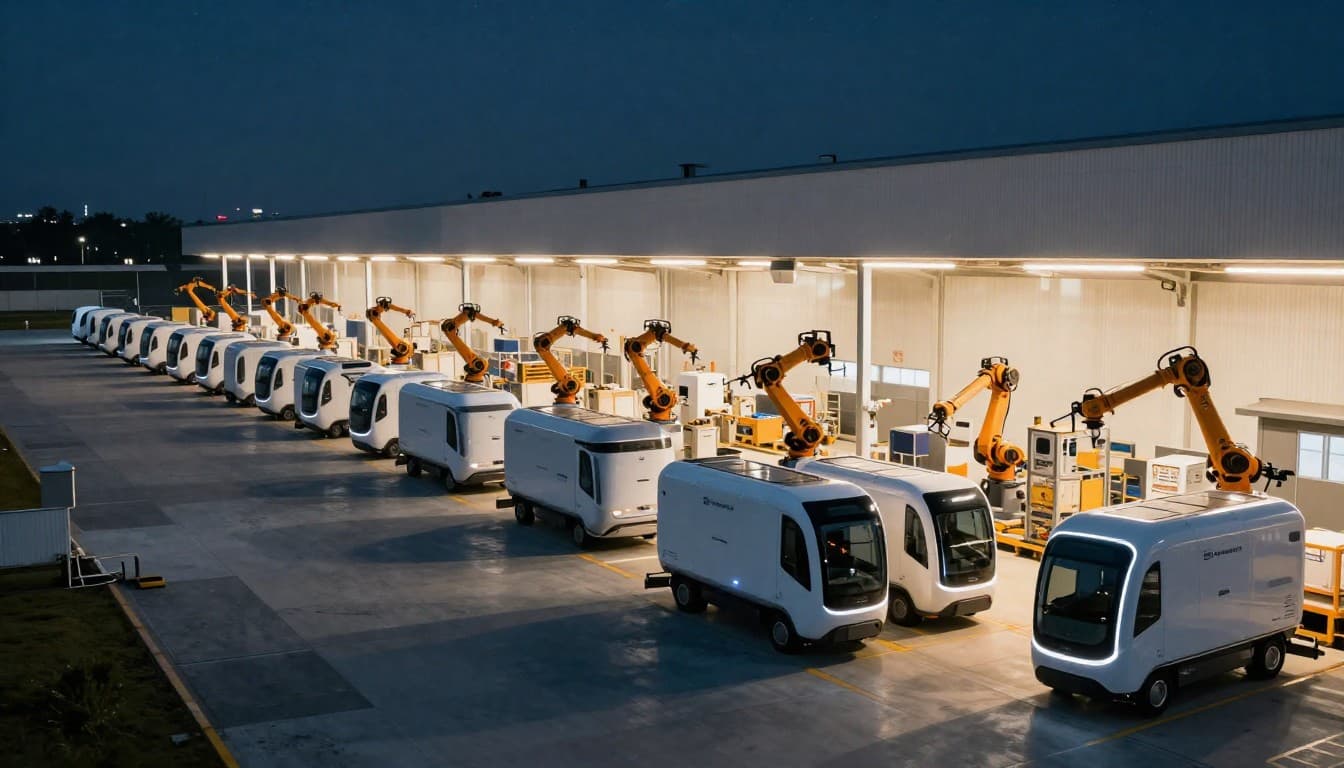
The moving industry, long characterized by its reliance on manual processes and human capital, stands at a pivotal juncture in 2026. For decades, scaling operations meant a direct, often linear, increase in headcount – particularly within sales and customer service. This traditional model, while proven, inherently capped growth potential, introduced significant variable costs, and amplified risk during periods of expansion or market volatility.
Today, however, the paradigm has irrevocably shifted. We are witnessing a fundamental redefinition of operational leverage, driven by the maturation and widespread adoption of sophisticated AI voice agents. These intelligent autonomous systems are not merely augmenting human teams; they are fundamentally reshaping the unit economics of the moving enterprise, enabling unprecedented sales capacity and decisively de-risking ambitious expansion strategies.
The Limits of Linear Growth: Why Traditional Models Constrained Ambition
Before we delve into the transformative power of autonomous voice infrastructure, it's crucial to understand the inherent limitations of the legacy approach to scaling sales and operations. Historically, a mover's ability to generate quotes, qualify leads, and convert prospects was directly tied to the availability and performance of its human sales team.
Consider the common challenges faced just a few years ago:
- Scalability Ceilings: Human sales teams, by their very nature, are finite. They work within set hours, have individual call capacities, and require breaks, training, and supervision. This created an artificial ceiling on the number of leads that could be effectively processed, particularly during peak seasons or sudden surges in demand.
- Prohibitive Variable Costs: Every new salesperson added to the roster brought with it a host of variable costs: salaries, benefits, commissions, training, office space, and managerial overhead. These costs scaled linearly with growth, making rapid, large-scale expansion a financially daunting proposition.
- Inconsistent Customer Experience: Human performance varies. Even the best sales teams experience off days, fatigue, or inconsistencies in their pitch, pricing, or adherence to best practices. This led to a fragmented customer experience that was difficult to standardize across different markets or even within the same team.
- Geographic Constraints: Entering a new market traditionally required establishing a physical presence, hiring local staff, and investing heavily in regional infrastructure. This was a slow, capital-intensive process fraught with risks, especially if market adoption was slower than anticipated.
- Latency and Missed Opportunities: In a competitive digital landscape, speed is paramount. Missed calls, delayed follow-ups, or long hold times directly translated into lost leads, as customers simply moved on to the next available provider.
These factors collectively constrained the ambition of many moving companies, forcing them to choose between conservative, incremental growth and high-risk, capital-intensive expansion. The path to true exponential scale seemed elusive.
Redefining Operational Leverage: AI Voice Agents as the New Foundation
In 2026, AI voice agents have emerged as the definitive answer to these challenges, fundamentally redefining what operational leverage means for the moving industry. Operational leverage, at its core, refers to the degree to which a company can increase its revenue with a proportionally smaller increase in its operating costs. AI voice agents don't just improve this ratio; they obliterate the traditional linear relationship between sales capacity and cost.
Infinite Sales Capacity: Beyond Human Limitations
The most immediate and impactful benefit of integrating AI voice agents is the realization of virtually infinite sales capacity. Imagine a sales team that:
- Works 24/7/365: Never sleeps, never takes a holiday, and is always ready to engage with a prospect, regardless of time zone or local business hours.
- Handles Unlimited Concurrent Conversations: Unlike human agents who are limited to one call at a time, AI voice agents can engage with hundreds, even thousands, of prospects simultaneously, ensuring every inbound call is answered instantly and every outbound campaign is executed with precision.
- Provides Instant, Consistent Response: Eliminates hold times and ensures every interaction adheres to the highest standards of accuracy, brand messaging, and legal compliance. This "capture-first" approach is critical in today's hyper-competitive markets, as explored in depth in our article, The Capture-First Strategy: Neutralizing Competitor Ad Spend by Eliminating Intake Latency in High-Volume Moving Markets.
- Adapts and Learns Continuously: Powered by advanced machine learning models, these agents continuously refine their performance, optimize conversion funnels, and adapt to new pricing strategies or market conditions in real-time, far surpassing the static training of human counterparts.
This "always-on, always-ready" capability means that no lead is ever left unturned, no potential customer is ever put on hold, and no sales opportunity is ever missed due to capacity constraints. For movers, this translates directly into a dramatic increase in qualified leads and booking conversions without a corresponding increase in labor costs.
Decoupling Growth from Variable Labor Costs
Perhaps the most profound impact of AI voice agents on operational leverage is the fundamental shift in cost structure. Traditional sales operations are characterized by high variable costs – the more you sell, the more you pay in commissions, salaries, and benefits. AI voice infrastructure, however, transforms these variable costs into predictable, scalable fixed (or semi-fixed) investments.
As we discussed in The Capital Reallocation Blueprint: Driving 2026 Moving Growth by Transforming Variable Sales Labor into Fixed Autonomous Infrastructure, this reallocation of capital is a game-changer. Companies can invest in their autonomous infrastructure once and then scale its output exponentially with minimal additional cost. This provides an unparalleled level of financial predictability and control, liberating capital that was once tied up in payroll and allowing it to be reinvested into strategic growth initiatives, fleet expansion, or technology upgrades. The resulting financial agility not only strengthens the balance sheet but also positions the enterprise for superior valuation multipliers, decoupling growth from labor dependencies.
Data-Driven Precision and Predictive Intelligence
Beyond raw capacity, AI voice agents bring an unprecedented level of data-driven precision to sales operations. Every interaction, every nuance in a prospect's query, every successful or unsuccessful negotiation, is meticulously recorded, analyzed, and transformed into actionable intelligence. This constant feedback loop allows the system to:
- Optimize Pricing in Real-Time: Dynamically adjust quotes based on demand, resource availability, customer profile, and competitive landscape.
- Personalize Engagement at Scale: Tailor conversations and offerings to individual customer needs and preferences, driving higher conversion rates and improving customer satisfaction.
- Identify Trends and Opportunities: Pinpoint emerging market trends, predict demand surges, and proactively identify new sales opportunities based on aggregate interaction data.
This ability to transform raw interaction data into a sustainable competitive advantage is a concept we explored in detail in "The Intelligence Arbitrage." In 2026, data is the new oil, and AI voice agents are the refineries that extract its maximum value.
De-Risking Mover Expansion: A Strategic Advantage for 2026 and Beyond
The ability to scale sales capacity infinitely and control costs transforms expansion from a high-stakes gamble into a calculated, de-risked strategy. For movers looking to grow their footprint in 2026, AI voice agents offer a suite of advantages:
- Scalability on Demand: Entering new markets no longer requires a speculative upfront investment in a new sales team. AI voice agents can be deployed instantly, extending your sales arm into any geography without the accompanying payroll risk. This allows for agile market testing and rapid scaling in successful territories.
- Standardized Customer Experience, Everywhere: Maintain a consistent brand voice, service quality, and operational standard across all markets, regardless of geographic location. This ensures brand integrity and builds customer trust, crucial for rapid adoption in new regions.
- Real-Time Market Intelligence from Day One: AI agents deployed in new markets immediately begin collecting data on local demand patterns, competitor pricing, customer preferences, and unique logistical challenges. This real-time intelligence provides invaluable insights for strategic decision-making and rapid adaptation, significantly reducing the blind spots associated with new market entry.
- Optimal Resource Allocation: By automating high-volume, repetitive sales tasks, human sales professionals are liberated to focus on higher-value activities: complex negotiations, strategic partnerships, high-touch VIP accounts, and proactive business development. This elevates the role of human talent, fostering innovation and maximizing their strategic impact.
- Accelerated Time to Market: The bureaucratic hurdles and time lags associated with hiring and training local sales teams are eliminated. New markets can be activated in days or weeks, not months, allowing movers to seize opportunities faster and gain a decisive first-mover advantage.
This comprehensive de-risking mechanism allows movers to pursue aggressive expansion strategies with confidence, knowing that their sales infrastructure can flex and adapt without incurring crippling costs or diluting service quality.
The Pillars of AI-Driven Sales Transformation
To truly harness this redefined operational leverage, movers in 2026 are focusing on several key areas for AI voice agent deployment:
1. Autonomous Lead Qualification & Nurturing
AI voice agents are becoming the first point of contact for virtually all inbound leads. They can:
- Qualify leads instantly: Gathering essential information (move date, origin/destination, inventory size, budget) with high accuracy.
- Segment prospects: Routing high-value, complex leads to human experts while handling routine inquiries autonomously.
- Nurture cold leads: Proactively re-engaging prospects who haven't converted, offering updated quotes, or answering follow-up questions.
- Handle outbound campaigns: Calling warm leads, following up on online quotes, or executing promotional campaigns at scale, ensuring The Perpetual Lead Machine: How AI Voice Orchestration Drives Unrivaled Market Dominance for Movers by 2026 is always running.
2. Dynamic Pricing & Autonomous Negotiation
One of the most sophisticated capabilities of advanced AI voice agents is their ability to engage in real-time, intelligent negotiation and dynamic pricing. Leveraging complex algorithms, they can:
- Offer personalized, data-driven quotes: Instantly factoring in current demand, truck availability, route optimization, historical data, and even competitor pricing to generate the most profitable quote.
- Engage in autonomous negotiation: Within predefined parameters, agents can offer discounts, suggest alternative dates, or bundle services to secure bookings, optimizing margins and conversion rates simultaneously. This is the essence of what we've termed "Predictive Pricing & Autonomous Negotiation."
3. Proactive Engagement & Follow-up
The sales process doesn't end with a quote. AI voice agents excel at proactive engagement:
- Pre-move confirmations: Ensuring customers are prepared and confirming details, reducing no-shows and last-minute issues.
- Post-move feedback: Collecting valuable insights to improve service and identify potential issues quickly.
- Reschedule and cancellation management: Handling changes efficiently, minimizing friction and administrative burden.
4. Seamless CRM and Ecosystem Integration
For AI voice agents to deliver maximum operational leverage, deep integration with existing CRM systems, dispatch software, and other operational platforms is non-negotiable. This ensures:
- Real-time data synchronization: All lead information, conversation logs, quotes, and booking details are immediately updated across the entire ecosystem.
- Automated workflows: Triggering follow-up tasks, scheduling appointments, or generating contracts without human intervention.
- Unified view of the customer: Providing both human and AI agents with a complete historical context for every interaction.
Implementation Checklist for 2026 Movers
To successfully leverage AI voice agents for infinite sales capacity and de-risked expansion, consider this implementation checklist:
- Define Clear Objectives: What specific sales and expansion KPIs do you aim to impact (e.g., lead conversion rate, cost per acquisition, market penetration speed, revenue per truck-hour)?
- Audit Current Sales & Operations: Identify bottlenecks, high-volume repetitive tasks, and areas where human capital is currently underutilized or stretched thin.
- Phased Rollout Strategy: Start with specific use cases (e.g., inbound lead qualification, overflow handling) before expanding to more complex tasks like autonomous negotiation or outbound campaigns.
- Data Strategy Development: Ensure robust data collection, storage, and analytics capabilities are in place to feed and train your AI agents, and to extract actionable insights.
- Seamless Integration Planning: Map out how AI voice agents will integrate with your existing CRM, ERP, dispatch, and other critical business systems. Prioritize data flow and real-time synchronization.
- Human-AI Collaboration Framework: Develop strategies for your human sales team to collaborate effectively with AI agents, focusing human talent on high-value, complex interactions. This isn't about replacement, but augmentation and strategic reallocation.
- Continuous Monitoring & Optimization: AI voice agents are not "set it and forget it." Establish processes for ongoing performance monitoring, A/B testing, and iterative improvement based on real-world data and evolving business needs.
- Compliance & Ethical Guidelines: Ensure your AI voice agents adhere to all relevant data privacy regulations (e.g., GDPR, CCPA) and maintain ethical communication standards.
The Future is Now: Uncapped Growth and Resilient Expansion
In 2026, the concept of operational leverage has transcended incremental efficiency gains. It's about achieving exponential growth by decoupling traditional constraints. AI voice agents are not just tools; they are the foundational infrastructure upon which modern moving enterprises will build their future. They enable a vision where sales capacity is limited only by ambition, where expansion into new markets is swift and low-risk, and where every customer interaction is an opportunity for optimized value creation.
By embracing this redefined operational leverage, movers are not just adapting to the future; they are actively shaping it, establishing an unassailable competitive advantage that will drive sustained market dominance for years to come. The era of infinite sales capacity and de-risked expansion is not a distant aspiration—it is the present reality.