The Autonomous Growth Architect: How AI Voice Agents Design Self-Optimizing Revenue Pathways for Movers by 2026
Discover how AI voice agents are becoming autonomous architects, crafting self-optimizing revenue streams for movers and reshaping industry growth in 2026.
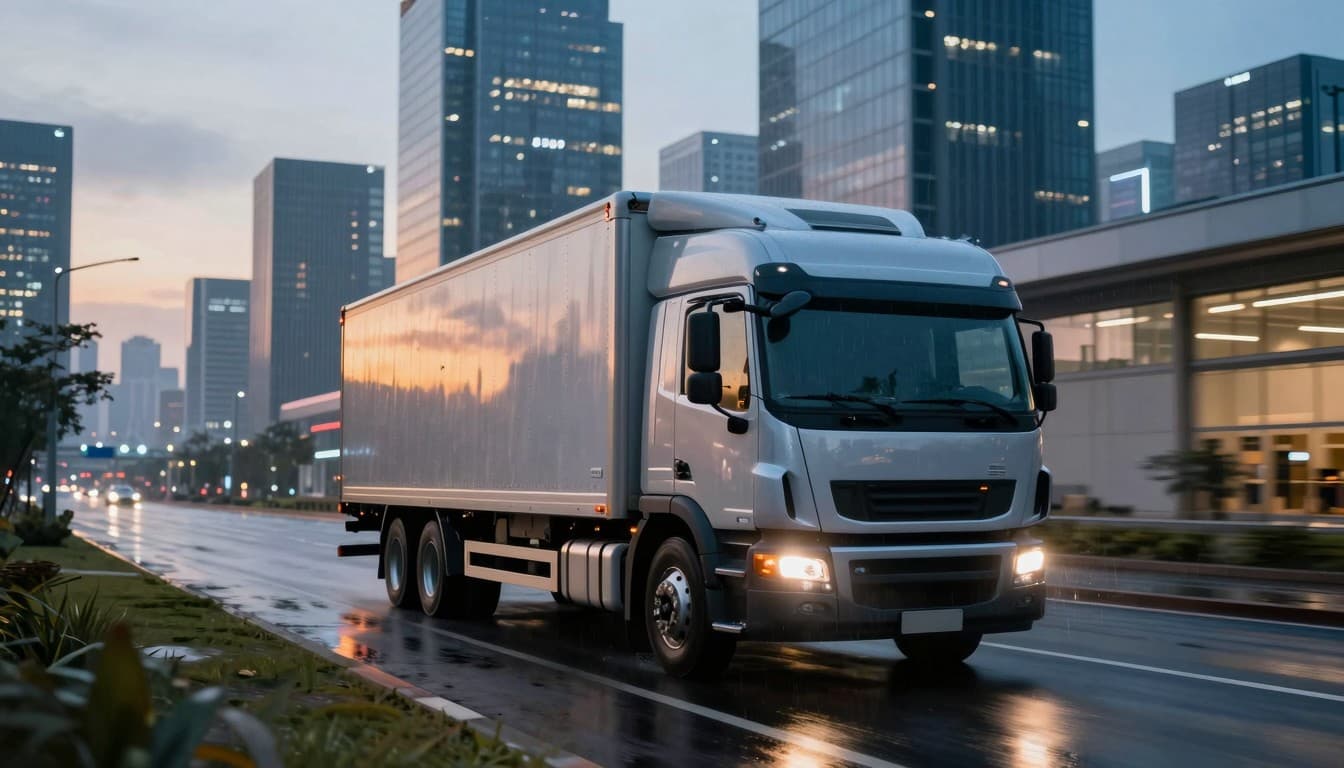
The landscape of the moving industry has undergone a radical transformation by 2026. What was once a domain characterized by manual processes, reactive customer service, and unpredictable revenue streams has evolved into a sophisticated ecosystem driven by advanced AI. At the heart of this evolution lies the rise of the "Autonomous Growth Architect" – an AI voice agent not merely responding to inquiries, but actively designing, refining, and self-optimizing every facet of a mover's revenue pathway. This isn't just about automation; it's about intelligent, adaptive systems creating predictable, exponential growth.
In this masterclass, we will dissect how these sophisticated AI voice agents function as the ultimate growth architects, meticulously crafting self-optimizing revenue pathways that secure market leadership and redefine profitability for moving enterprises. We are no longer discussing speculative future tech; we are examining the proven strategies that industry leaders are implementing today, in 2026, to achieve unparalleled success.
The Dawn of the Autonomous Growth Architect in 2026
The shift from simple automation to autonomous architecture marks a profound leap forward. In early 2020s, AI voice agents were largely confined to handling routine inquiries, scheduling basic appointments, or providing rudimentary quotes. Their function was to augment human agents, offloading repetitive tasks. By 2026, their capabilities have expanded exponentially.
An Autonomous Growth Architect, powered by state-of-the-art AI, operates with a comprehensive understanding of the entire moving business lifecycle. It integrates real-time market data, historical performance, customer behavior patterns, and operational capacities to make strategic decisions. This AI doesn't just execute tasks; it learns, adapts, and designs pathways for revenue maximization, identifying inefficiencies and opportunities for growth without direct human intervention. Its goal is to create a perpetual motion machine for revenue generation, continually improving its own performance.
This architectural shift moves us beyond linear growth. Where traditional businesses scale by adding more resources (more sales agents, more marketing spend), businesses leveraging AI voice agents as autonomous architects achieve exponential growth. The AI constantly seeks out the most efficient, most profitable avenues, optimizing the entire funnel from lead generation to post-move advocacy.
Unpacking the AI Voice Agent's Toolkit for Self-Optimization
To understand how AI voice agents become autonomous growth architects, we must examine the advanced functionalities that constitute their toolkit. These are the engines driving self-optimization across all revenue pathways.
Hyper-Personalized Engagement & Predictive Intent
Gone are the days of generic scripts. By 2026, AI voice agents are equipped with advanced natural language understanding (NLU) and sentiment analysis, enabling them to comprehend not just what a potential customer says, but how they say it and why. This allows for real-time adaptation of conversation flows, offering truly hyper-personalized experiences that resonate deeply. The AI can predict customer intent with remarkable accuracy, identifying pain points, preferences, and even budget considerations before they are explicitly stated. This foresight allows the AI to steer conversations towards optimal solutions, offering the most relevant moving packages, add-on services, and logistical advice, thereby significantly increasing conversion probability.
Dynamic Pricing & Offer Optimization
One of the most powerful capabilities of an autonomous architect is its ability to implement dynamic pricing and tailor offers in real-time. Leveraging complex algorithms, AI voice agents can analyze current demand, available capacity, competitor pricing, customer segmentation, and historical conversion data to generate optimal quotes instantly. If a customer is highly qualified and the moving schedule has a slight lull, the AI might subtly adjust pricing or offer a value-added service to secure the booking. Conversely, during peak demand or for lower-value leads, the AI can hold firm on pricing or prioritize higher-margin services. This continuous, real-time optimization ensures that every interaction maximizes potential revenue while maintaining competitiveness.
Self-Evolving Lead Qualification & Nurturing
The journey from initial inquiry to booked move is often fraught with friction. Autonomous AI voice agents streamline this process by providing self-evolving lead qualification and nurturing. They intelligently engage with inbound calls, web chat inquiries, and even outbound campaigns, asking precise, data-driven questions to determine lead quality. Based on real-time responses and historical data, the AI refines its qualification criteria and adjusts its nurturing sequences. It knows when to escalate a high-value lead to a human expert, when to send automated follow-up communications, and when to re-engage a dormant prospect with a targeted offer. This adaptive system ensures that resources are always focused on the most promising leads, drastically improving conversion efficiency. As we explored in The Predictable Pipeline: How AI Voice Agents Forge Consistent Sales Conversion and Mover Growth in 2026, this level of intelligent nurturing is key to building a robust and reliable sales funnel.
Proactive Capacity Integration & Resource Allocation
An autonomous growth architect understands that generating leads without the capacity to fulfill them is a futile exercise. By 2026, AI voice agents are seamlessly integrated with operational systems, possessing real-time visibility into truck availability, crew schedules, and storage capacities. This integration allows the AI to proactively manage bookings, ensuring that offers made to customers align perfectly with available resources. If a particular date is nearing full capacity, the AI can automatically guide customers towards alternative dates or offer incentives for flexibility. This prevents overbooking, optimizes resource utilization, and ensures a smoother operational flow, directly impacting customer satisfaction and profitability.
Adaptive Upselling, Cross-selling, and Value Enhancement
Maximizing the lifetime value of each customer is a core tenet of self-optimizing revenue pathways. AI voice agents, acting as growth architects, excel at identifying natural opportunities for upselling and cross-selling. During a quote conversation, if a customer mentions valuable items, the AI might suggest specialized packing services or insurance. If a move involves temporary housing, it could recommend storage solutions. These suggestions are not generic; they are adaptively tailored based on the ongoing conversation, customer profile, and predictive analytics regarding their needs. Post-move, the AI can also engage with customers for feedback, offer future services (e.g., seasonal packing, long-term storage), or solicit referrals, extending the customer relationship far beyond a single transaction.
Continuous Feedback Loops & Algorithmic Refinement
The "self-optimizing" aspect is rooted in the AI's ability to learn from every single interaction, every booking, every successful upsell, and every lost lead. Every data point feeds back into the AI's core algorithms, leading to continuous refinement. Was a particular pricing strategy more effective for a specific demographic? Did a certain script lead to higher conversion rates? How did changes in market conditions impact lead quality? The AI processes this information autonomously, adjusting its strategies, conversation flows, and offer parameters in real-time. This iterative learning process means the AI is constantly getting smarter, continually optimizing its approach to revenue generation, creating a truly self-improving system.
The Blueprint: Designing Self-Optimizing Revenue Pathways
The capabilities outlined above coalesce into a comprehensive blueprint for self-optimizing revenue pathways, creating a seamless, intelligent flow from initial contact to long-term customer value.
Phase 1: Intelligent Market Capture & Qualification
The journey begins with the AI voice agent acting as the first point of contact for the vast majority of inbound inquiries, across phone, web chat, and potentially even emerging voice interfaces. The AI performs instantaneous pre-qualification, identifying genuine leads from casual inquiries. It gathers critical information, such as move size, distance, dates, and special requirements. High-intent, high-value leads are immediately prioritized for either automated quote generation or, if necessary, seamless transfer to a human specialist, complete with a comprehensive summary of the AI's interaction and recommendations. This intelligent filtering ensures human teams only engage with the most promising opportunities.
Phase 2: Accelerated Conversion & Transactional Fluidity
Once qualified, the AI voice agent excels at guiding prospects through the quoting and booking process. Leveraging dynamic pricing, it can generate accurate, competitive quotes in real-time, often within seconds. It can articulate service options, explain terms, address objections, and process payments securely. The AI’s ability to communicate clearly and confidently, combined with its predictive capabilities to anticipate customer questions, significantly reduces friction in the conversion funnel. It transforms what could be a lengthy, back-and-forth human interaction into a smooth, efficient, and often fully automated transaction.
Phase 3: Operational Harmony & Service Excellence
The AI's role extends beyond the sale. Post-booking, it continues to communicate with customers, providing crucial updates, reminders, and preparation tips. Crucially, the autonomous architect integrates deeply with operational planning. It feeds real-time booking data into dispatch and logistics systems, ensuring optimal route planning, crew scheduling, and resource allocation. If unforeseen circumstances arise, such as a crew delay or a truck malfunction, the AI can proactively inform affected customers, manage expectations, and even re-route resources or re-schedule with minimal human oversight. This proactive approach ensures service excellence and minimizes costly disruptions.
Phase 4: Lifetime Value Cultivation & Brand Advocacy
The completion of a move is not the end of the pathway; it's an opportunity for continued engagement. AI voice agents follow up post-move, gathering feedback, addressing any residual concerns, and identifying opportunities for future services. It might offer seasonal storage solutions, remind customers of moving insurance benefits, or solicit positive reviews and referrals. By nurturing these relationships, the autonomous architect helps convert one-time customers into loyal, high-lifetime-value advocates, creating a self-sustaining cycle of growth and brand strength.
Elevating the Human Element: Strategic Orchestration in an Autonomous World
The advent of the Autonomous Growth Architect does not diminish the role of human talent; rather, it elevates it. By offloading the vast majority of repetitive, data-driven, and time-consuming tasks to AI voice agents, human teams are freed to focus on strategic initiatives, complex problem-solving, and building deeper customer relationships where empathy and nuance are paramount.
Sales professionals transition from basic quoting to high-level deal negotiation for enterprise clients or resolving intricate customer challenges. Operations managers gain predictive insights from the AI, allowing them to proactively optimize logistics rather than reactively manage crises. Marketing teams can leverage the AI's constant data stream to craft hyper-targeted campaigns and innovate new service offerings. Building on the concepts discussed in From Operators to Orchestrators: How AI Voice Agents Elevate the Human Role in Mover Growth Strategy by 2026, we see human roles transforming into those of orchestrators, strategists, and innovators, guiding the AI and focusing on areas that truly require human creativity and emotional intelligence. This symbiotic relationship between AI and human intelligence is the hallmark of leading mover businesses in 2026.
Key Performance Indicators for Autonomous Growth in 2026
Measuring the success of self-optimizing revenue pathways requires a refined set of KPIs that go beyond traditional metrics:
- Algorithmic ROI: Quantifies the return on investment specifically attributable to AI-driven optimizations, beyond just overall conversion rates.
- Self-Optimization Delta: Measures the continuous improvement in conversion rates, average order value, or lead qualification accuracy over time, reflecting the AI's learning.
- Predictive Accuracy: Tracks how accurately the AI forecasts demand, pricing sweet spots, and customer churn.
- Lead-to-Move Velocity (AI-driven): The speed at which AI-qualified leads convert into booked moves, demonstrating efficiency.
- Human-AI Collaboration Efficiency: Metrics on the seamlessness of transfers, the quality of AI-generated summaries for human agents, and the time saved by human teams.
- Customer Lifetime Value (LTV) Growth: A key indicator of the AI's success in fostering long-term relationships and repeat business.
- Capacity Utilization Rate (AI-Optimized): How effectively trucks and crews are utilized due to AI's integration with operational planning.
These metrics provide a granular view into the performance of the autonomous architect, allowing for continuous refinement and ensuring that the self-optimizing pathways deliver maximum value.
Implementation Checklist for Autonomous Growth
For moving companies ready to embrace the Autonomous Growth Architect and design self-optimizing revenue pathways by 2026, consider this checklist:
- Assess Current Digital Infrastructure: Ensure your CRM, booking, and operational systems are capable of robust API integration with AI platforms.
- Define Core Revenue Pathways: Map out your current lead-to-cash process to identify specific areas for AI intervention and optimization.
- Start with a Phased Rollout: Begin with automating specific, high-volume, low-complexity tasks (e.g., initial lead qualification, basic quoting) before expanding.
- Invest in High-Quality Data: AI's effectiveness is directly tied to the quality and volume of data it learns from. Clean, comprehensive historical data is crucial.
- Establish Clear AI Governance & Oversight: Define human roles for monitoring AI performance, setting strategic parameters, and intervening when necessary.
- Train Your Human Workforce: Prepare your team for their elevated roles as orchestrators and strategists, focusing on collaboration with AI.
- Implement Robust A/B Testing & Feedback Loops: Continuously test different AI strategies, pricing models, and conversational flows, and integrate performance data back into the AI's learning algorithms.
- Prioritize Seamless Customer Experience: Ensure that AI interactions are natural, efficient, and maintain the brand voice and quality standards.
- Monitor Key Performance Indicators: Track the specific metrics outlined above to measure the effectiveness of your autonomous growth architect and identify areas for further optimization.
The Strategic Imperative for 2026 and Beyond
By 2026, the discussion around AI voice agents has moved past "if" to "how" and "how effectively." Moving enterprises that have embraced AI voice agents as autonomous growth architects are demonstrably outperforming their competitors. They are not just surviving; they are thriving, achieving unprecedented levels of efficiency, customer satisfaction, and, most importantly, predictable and exponential revenue growth.
The autonomous architect is more than a tool; it's a strategic partner that constantly evolves with your business and the market, relentlessly seeking and designing the most profitable pathways. For those movers who seize this opportunity, 2026 is not just another year; it's the beginning of a new era of self-optimizing success.