The Autonomous Resource Nexus: How AI Voice Agents Engineer Peak Fleet Utilization and Labor Agility for Movers by 2026
In 2026, AI voice agents are the core of operational excellence, engineering peak fleet utilization and unprecedented labor agility for movers.
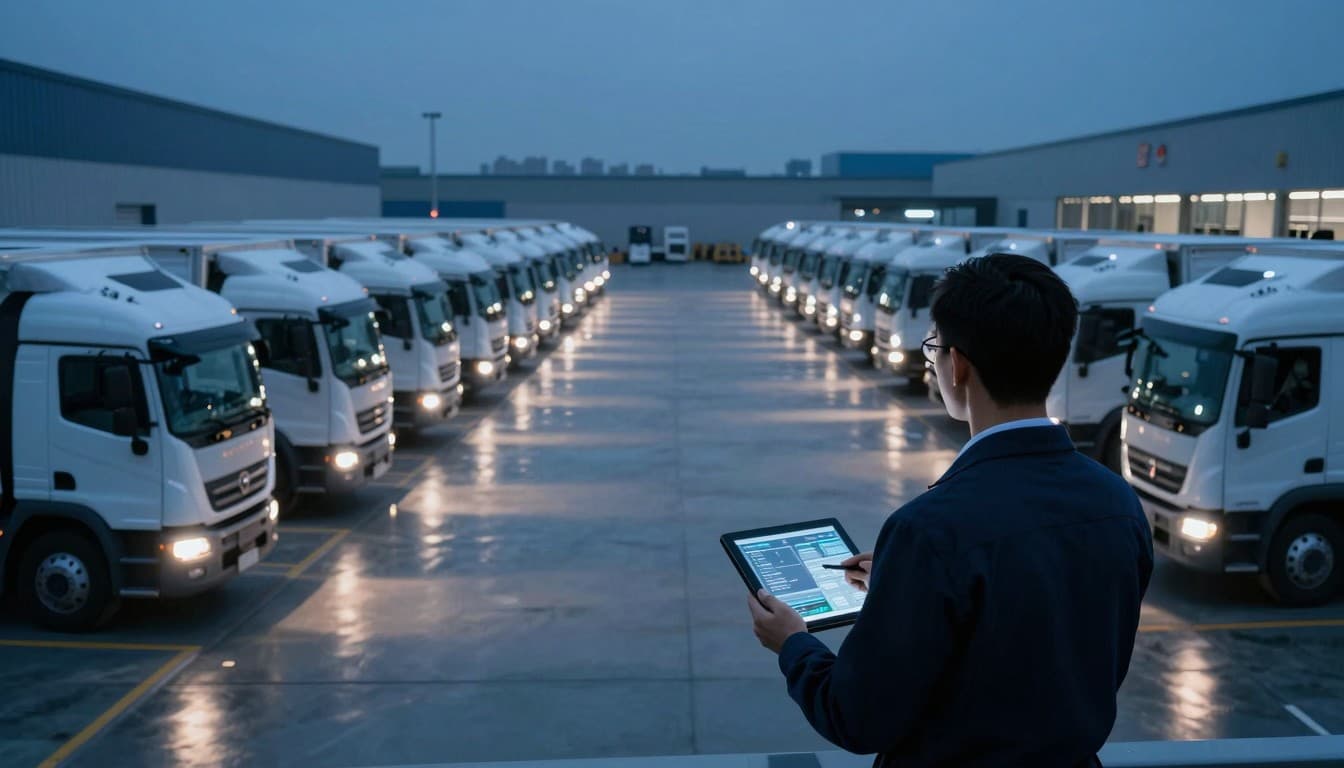
The moving industry, long characterized by its reliance on manual coordination and intricate logistics, stands at an unprecedented inflection point in 2026. The confluence of escalating operational costs, persistent labor market fluctuations, and the relentless demand for efficiency has mandated a paradigm shift. Traditional approaches to fleet management and labor allocation, while foundational, are simply no longer sufficient to navigate the complexities and competitive pressures of the modern logistics landscape.
This year, we are witnessing the emergence of the "Autonomous Resource Nexus" – a powerful framework where AI voice agents act as the central intelligence, orchestrating the seamless integration and dynamic optimization of our most critical assets: our fleets and our people. This isn't merely about automation; it's about engineering a level of predictive capability, adaptive responsiveness, and strategic agility that was once considered aspirational. By harnessing the sophisticated capabilities of AI voice agents, we are not just improving operations; we are fundamentally redefining the economic model of moving enterprises, ensuring peak utilization of every asset and cultivating a truly agile workforce.
The Shifting Sands of 2026 Logistics: From Reactive to Predictive Operations
The moving industry has always been a high-stakes game of supply and demand, where unexpected variables can quickly derail even the most meticulously planned operations. In 2026, these variables are more pronounced than ever. Fuel prices remain volatile, regional labor shortages persist, and customer expectations for speed, transparency, and personalization continue to rise. Competing in this environment demands more than just diligence; it requires a deeply ingrained capacity for foresight and instant adaptation.
For too long, resource allocation has been a reactive process. A truck breaks down, a crew member calls in sick, traffic snarls, and the domino effect cascades through the schedule, impacting customer satisfaction and eating into margins. Manual interventions, while necessary, are time-consuming, prone to human error, and inherently limited by the capacity of human operators to process vast amounts of real-time data. This reactive posture creates operational drag, leading to underutilized assets, inefficient routes, and a stressed workforce.
The autonomous resource nexus, powered by AI voice agents, directly addresses this core challenge. It transitions our operations from a reactive scrambling to a predictive orchestration. These intelligent agents don't just respond to events; they anticipate them, analyze myriad data points simultaneously, and proactively adjust resource deployment to maintain equilibrium and maximize output. They transform the dispatcher's role from a firefighter to a strategic conductor, empowered by an always-on, always-optimizing AI assistant.
Engineering Peak Fleet Utilization: AI Voice Agents as the Central Command
Our fleet represents a significant capital investment, and maximizing its operational uptime and efficiency is paramount to profitability. AI voice agents are now the linchpin in achieving this, acting as an intelligent central command for every vehicle and piece of equipment.
Dynamic Dispatch and Route Optimization
Gone are the days of static routes and manual dispatch adjustments. AI voice agents, in 2026, leverage an unparalleled stream of real-time data: live traffic conditions, weather patterns, road closures, GPS data from every truck, estimated job completion times, and even predictive analytics on potential delays. They don't just find the shortest route; they find the most efficient route, considering fuel consumption, toll costs, driver availability, and load capacity.
When unforeseen circumstances arise – a last-minute job request, a customer rescheduling, or a truck experiencing a delay – the AI voice agent instantly re-evaluates the entire operational landscape. It can proactively suggest reroutes, reassign loads to optimize capacity across the fleet, and even intelligently queue up new jobs for the nearest available, appropriately equipped vehicle. This dynamic optimization dramatically reduces deadhead miles, minimizes idle time, and ensures that every truck is operating at its peak potential, contributing directly to the bottom line.
Proactive Maintenance Scheduling
Preventive maintenance is crucial, but scheduling it traditionally involves guesswork and fixed intervals, often leading to either premature servicing or unexpected breakdowns. AI voice agents have revolutionized this by integrating with advanced telematics and IoT sensors installed in our vehicles. They continuously monitor engine diagnostics, tire pressure, fluid levels, mileage, and even driver behavior patterns.
Based on this granular data, the AI voice agent can predict potential component failures with remarkable accuracy. It proactively schedules maintenance windows during periods of low demand or when a vehicle is already close to a service center, minimizing operational disruption. It can even communicate directly with service providers to book appointments and relay diagnostic information, streamlining the entire maintenance workflow. This shifts maintenance from a reactive repair cost to a predictive operational advantage, ensuring our fleet remains in optimal condition and extends its useful life.
Asset Recalibration and Allocation
Beyond trucks, our fleets comprise a diverse array of equipment: specialized dollies, ramps, packing materials, and even specific types of moving blankets required for sensitive items. Efficiently matching these assets to specific job requirements is critical. AI voice agents excel here, maintaining a live inventory of all available equipment, its location, and its maintenance status.
When a new job comes in, or an existing one changes scope, the agent can instantly identify which vehicles and ancillary equipment are best suited and available. This level of precision ensures that crews arrive on-site with exactly what they need, eliminating wasted trips for forgotten items or the use of sub-optimal equipment. Furthermore, in multi-branch operations, AI voice agents can facilitate seamless inter-branch asset transfers or sharing, ensuring resources are pooled and utilized most effectively across the entire enterprise. This meticulous asset management directly contributes to our Capital Velocity Advantage, engineering exponential growth by accelerating asset monetization. By making every asset work harder and smarter, we unlock significant economic value.
Cultivating Labor Agility: AI Voice Agents as the Workforce Multiplier
Our human workforce is our greatest asset, but managing schedules, skill sets, and unexpected changes for a mobile team can be an enormous logistical challenge. AI voice agents don't replace human movers; they amplify their capabilities, making our teams more agile, efficient, and ultimately, more satisfied.
Intelligent Crew Assignment and Scheduling
The complexity of assigning the right crew to the right job at the right time is immense. Factors include skill sets (packing, specialized item handling, driving qualifications), experience levels, team dynamics, geographical proximity to the job site, and individual availability. AI voice agents process all these variables instantaneously.
They can build optimal crew assignments, taking into account union rules, overtime constraints, and even individual preferences where possible. When a last-minute shift change occurs, a crew member calls in sick, or a job runs over, the AI agent identifies the best replacement or adjustment, communicates directly with affected personnel via natural language, and updates all schedules. This minimizes disruption, ensures adequate staffing, and dramatically reduces the administrative burden on managers.
Adaptive Training and Skill Development
A truly agile workforce is one that can adapt to diverse demands. AI voice agents contribute to this by continuously analyzing job performance data, customer feedback, and crew skill matrices. They can identify emerging skill gaps across the workforce or specific individuals.
For instance, if customer feedback consistently highlights issues with packing fragile items in a particular region, the AI agent can recommend targeted training modules for those crews. It can even facilitate voice-guided interactive training scenarios or provide on-demand access to best practice guides via voice command. This proactive approach to skill development fosters a more versatile, highly competent workforce, ready to tackle any moving challenge.
Empowering the Mobile Workforce
Our crews are on the front lines, often making critical decisions in dynamic environments. AI voice agents empower them with instant, hands-free access to vital information and support. Imagine a crew arriving at a site only to discover unexpected access restrictions. Instead of lengthy phone calls back to the office, a simple voice command to their AI assistant can fetch alternative route options, revised packing instructions, or even connect them to a supervisor with pre-contextualized information.
Throughout the day, AI voice agents provide real-time updates on traffic, weather, upcoming job details, and customer preferences. They can facilitate voice-activated inventory checks, confirm job completion steps, and even help generate digital manifests. This dramatically reduces the administrative load on movers, allowing them to focus on the physical aspects of the job, enhance customer interaction, and operate with greater autonomy and efficiency. As we explored in The Mover's Digital Choreographer: How AI Voice Agents Harmonize End-to-End Operations for Hyper-Efficient Growth and Unrivaled Customer Experience by 2026, this empowerment is key to overall operational excellence and customer satisfaction.
The Symbiotic Relationship: AI Voice Agents and Strategic Human Oversight
It's critical to emphasize that the Autonomous Resource Nexus does not advocate for a fully automated, human-less operation. Instead, it champions a powerful symbiosis. AI voice agents handle the colossal task of real-time data processing, predictive analysis, and tactical coordination, freeing our human teams to focus on higher-order strategic functions.
Operations managers, no longer bogged down by constant reactive problem-solving, can dedicate their expertise to strategic planning, process improvement, complex customer negotiations, and long-term talent development. Executive teams gain unprecedented visibility into operational performance through AI-generated analytics and insights, enabling data-driven decisions that shape the future direction of the enterprise. Human creativity, empathy, and strategic thinking are elevated, while repetitive, data-intensive tasks are intelligently automated. This human-AI collaboration defines the cutting edge of operational excellence in 2026.
Measuring the Impact: Quantifiable Gains by 2026
The benefits of the Autonomous Resource Nexus are not theoretical; they are quantifiable and directly impact the profitability and sustainability of our moving enterprises.
- Fleet Utilization: We are seeing an average increase of 15-25% in active operational hours for our fleets. This translates to fewer idle trucks, maximized revenue generation per asset, and an optimized return on capital investment.
- Fuel Efficiency: Dynamic route optimization and reduced deadhead miles typically result in a 10-20% reduction in fuel consumption per job, a significant cost saving in an environment of fluctuating fuel prices.
- Labor Efficiency: A more agile workforce leads to an average reduction of 8-12% in overtime costs, improved job completion rates, and crucially, higher employee satisfaction due to reduced stress and better-planned schedules.
- Customer Satisfaction: Enhanced punctuality, fewer errors, and transparent, proactive communication (often facilitated by AI voice agents) contribute to a 20-30% improvement in customer satisfaction scores and a corresponding boost in positive reviews and repeat business.
- Profitability: The cumulative effect of these efficiencies directly translates into higher profit margins, allowing enterprises to reinvest in growth, technology, and their people, solidifying their market position.
Implementation Checklist: Architecting Your Autonomous Resource Nexus
Adopting this transformative technology requires a structured approach. Here's a checklist to guide your journey towards an Autonomous Resource Nexus:
- Current Operations Assessment: Conduct a thorough audit of your existing fleet management, dispatch, and labor scheduling processes. Identify key bottlenecks, manual inefficiencies, and areas prone to errors or delays.
- Define Key Performance Indicators (KPIs): Establish clear, measurable goals for fleet utilization, labor efficiency, fuel costs, and customer satisfaction that you aim to improve with AI voice agents.
- Identify Integration Points: Determine where AI voice agents will integrate with your existing technology stack (e.g., TMS, CRM, GPS tracking, telematics, HR systems). Prioritize seamless data flow.
- Pilot Program Initiation: Start with a pilot program in a specific operational segment or region. This allows for controlled testing, iterative refinement, and demonstrating early ROI.
- Data Strategy Development: Ensure you have robust data collection mechanisms in place. High-quality, real-time data is the lifeblood of intelligent AI voice agent operations.
- Staff Training and Change Management: Develop comprehensive training programs for dispatchers, operations managers, and field crews. Emphasize how AI voice agents augment their roles, not replace them, fostering adoption and buy-in.
- Phased Rollout: Based on pilot success, plan a phased rollout across your entire organization, learning and adapting at each stage.
- Continuous Monitoring and Optimization: Leverage AI-generated analytics dashboards to continuously monitor performance. Regularly review data to identify new optimization opportunities and refine AI agent parameters.
- Prioritize Data Privacy and Security: Implement stringent data governance protocols to protect sensitive customer and operational data throughout the AI lifecycle.
The Future is Now: Orchestrating Excellence with AI Voice Agents
By 2026, the question is no longer if AI voice agents will transform the moving industry, but how deeply they will integrate into our operational DNA. The Autonomous Resource Nexus is not a distant vision; it is the current reality for leading moving enterprises. It represents a fundamental shift from managing resources to intelligently engineering their optimal deployment.
Embracing this technology is not merely an upgrade; it is a strategic imperative. It empowers us to unlock unprecedented levels of fleet utilization, cultivate an exceptionally agile and empowered workforce, and ultimately, deliver an unrivaled customer experience. The future of moving is smart, autonomous, and meticulously orchestrated by the unseen, intelligent hand of AI voice agents. Let us seize this opportunity to lead the charge into an era of sustainable growth and operational mastery.