The Great Mover Divide: Why AI Voice Adoption Defines 2026's Industry Leaders and Laggards
In 2026, AI voice adoption isn't optional for movers—it's foundational. Uncover how industry leaders harness AI to dominate while others fall behind.
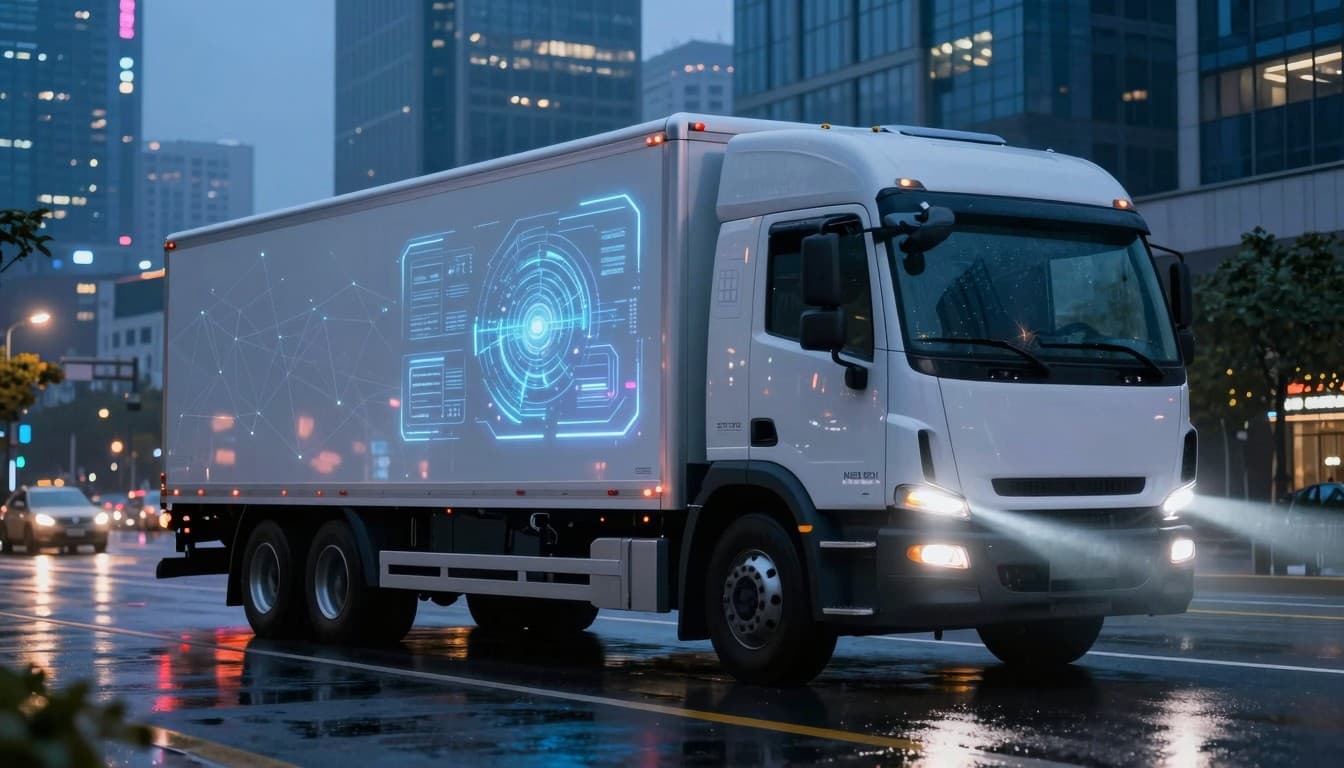
The Great Mover Divide: Why AI Voice Adoption Defines 2026's Industry Leaders and Laggards
The year is 2026. The pace of technological evolution, particularly within artificial intelligence, has not merely accelerated; it has achieved escape velocity, reshaping industries previously thought impervious to such rapid transformation. For the moving and logistics sector, this dynamic shift is more pronounced than ever, drawing a stark line between those poised for unprecedented growth and those destined to languish in the competitive wake. This is the year of the Great Mover Divide, a chasm defined by a single, critical differentiator: the strategic adoption, or rejection, of AI voice agents.
For years, we’ve discussed the potential of AI. In 2026, that potential has matured into undeniable, quantifiable advantage. The forward-thinking enterprises among us have not only embraced AI voice technology but have woven it into the very fabric of their operational and customer engagement strategies. They are redefining efficiency, elevating customer experience, and charting new trajectories for profitability and market dominance. Conversely, those still deliberating, those clinging to legacy systems and manual processes, are already finding themselves outmaneuvered, outpaced, and increasingly irrelevant. This isn't merely about incremental improvements; it's about a fundamental re-architecture of the mover business model itself.
The Shifting Landscape of 2026: A Pressure Cooker Environment
Our industry today is a crucible of challenges and opportunities. On one hand, demand for reliable, efficient moving services remains robust, fueled by economic shifts and evolving demographics. On the other, we face intensified competition, ever-escalating customer expectations for instant gratification and hyper-personalization, persistent labor shortages, and the imperative to optimize every aspect of our cost structure. The margins for error have shrunk, and the luxury of indecision has vanished.
The traditional mover's journey – from initial inquiry to final delivery – is fraught with friction points: missed calls, delayed quotes, inconsistent communication, and the sheer administrative burden of coordination. These inefficiencies translate directly into lost leads, diminished customer satisfaction, and eroded profit margins. In an environment where every touchpoint is a potential make-or-break moment, relying on human-only contact centers or antiquated digital forms is no longer merely suboptimal; it's a strategic liability.
Customers in 2026 expect seamless, intelligent interactions across all channels. They demand immediate answers, accurate quotes, transparent scheduling, and proactive updates. They seek reassurance and personalized service that acknowledges their unique moving needs. Meeting these demands consistently, at scale, and cost-effectively, is impossible without intelligent automation at the forefront. This is precisely where AI voice agents cease to be an emerging technology and become a non-negotiable operational cornerstone.
The AI Voice Imperative: Beyond Mere Automation
To understand the Great Mover Divide, we must first dispel any lingering misconceptions about what AI voice agents truly represent in 2026. This isn't about rudimentary chatbots or simplistic IVR systems. Modern AI voice platforms are sophisticated, context-aware, emotionally intelligent entities capable of:
- Natural Language Understanding (NLU) and Generation (NLG): Engaging in fluid, human-like conversations, understanding complex inquiries, and responding with nuanced, empathetic dialogue.
- Real-time Data Integration: Accessing and synthesizing information from CRM, ERP, scheduling, and inventory systems instantaneously to provide accurate, personalized responses.
- Predictive Analytics: Leveraging historical data to anticipate customer needs, proactively offer solutions, and even predict potential issues before they arise.
- Autonomous Task Execution: Booking appointments, generating quotes, processing payments, sending confirmations, and even initiating follow-up sequences without human intervention.
- Multilingual Capabilities: Seamlessly serving a diverse customer base across various linguistic preferences, unlocking new market segments.
This is not just automation; it is the deployment of a highly intelligent, indefatigable workforce operating at scale, around the clock, with unparalleled consistency and accuracy. It’s an operational paradigm shift that redefines what’s possible in customer engagement and internal process optimization.
Defining the Leaders: The AI-Powered Advantage
The moving companies thriving in 2026 are those who have strategically embraced AI voice agents, leveraging them to unlock a multi-faceted competitive advantage:
Hyper-Efficiency and Unprecedented Operational Leverage
Leaders have dismantled traditional operational bottlenecks. AI voice agents manage inbound inquiries, qualifying leads, providing instant quotes, and scheduling services with zero latency. This liberates human teams from repetitive, low-value tasks, allowing them to focus on complex problem-solving, strategic planning, and relationship management for high-value clients. The impact on resource allocation is transformative. We see significant reductions in call center wait times, fewer abandoned calls, and a dramatic increase in the volume of inquiries handled efficiently.
As we explored in our deep dive on Unlocking Exponential Operational Leverage, the impact on profit margins is profound. Overhead costs associated with staffing, training, and managing large call centers are dramatically reduced, while the ability to process more leads with greater accuracy directly translates into higher conversion rates and a healthier bottom line. This efficiency isn't just about saving money; it's about scaling operations rapidly without incurring proportional increases in fixed costs, fundamentally altering the unit economics of the business.
Unrivaled Customer Experience and Loyalty Engineering
In 2026, customer experience (CX) is the ultimate battleground. AI voice agents deliver a superior, consistent, and highly personalized CX that human-only teams struggle to match at scale. They provide 24/7 availability, ensuring no lead is ever missed and every customer query is addressed instantly. The ability to recall past interactions, understand nuances, and proactively offer relevant solutions creates a feeling of being genuinely understood and valued.
This seamless, intelligent interaction builds trust and loyalty, turning first-time customers into repeat clients and enthusiastic advocates. AI agents don't get tired, don't have bad days, and don't misplace information. They are the epitome of consistent excellence. This directly translates into higher customer satisfaction scores, reduced churn, and a stronger brand reputation—critical assets in a crowded market.
Data-Driven Strategic Foresight and Agility
Beyond customer interactions, AI voice agents are potent data collection and analysis tools. Every conversation, every inquiry, every successful booking or lost lead generates invaluable data. This data, processed by sophisticated AI algorithms, provides real-time insights into market demand, emerging trends, customer pain points, and even competitive intelligence. Leaders are using these insights to:
- Optimize service offerings: Identifying underserved niches or popular service add-ons.
- Refine pricing strategies: Adjusting rates dynamically based on demand and competitive landscape.
- Improve marketing campaigns: Tailoring messaging to resonate more effectively with target segments.
- Forecast operational needs: Predicting future demand for trucks, labor, and equipment with greater accuracy.
Building on the concepts of The Data-Moat Strategist, this real-time data flow cultivates proprietary market intelligence that empowers strategic decision-making at the highest levels. This agile, data-informed approach allows leaders to pivot quickly, seize new opportunities, and mitigate risks before they materialize, granting them a significant edge over competitors operating on intuition or lagging indicators.
Scalability and Aggressive Market Capture
The ability to scale operations rapidly without proportional increases in overhead is a hallmark of AI-driven leadership. Whether it’s handling seasonal demand surges, expanding into new geographical markets, or launching new service lines, AI voice agents provide the instantaneous capacity required. They effectively act as an infinitely scalable sales and support team, allowing businesses to capture market share that their less agile competitors simply cannot address. This enables a more aggressive, yet risk-mitigated, growth strategy. The "zero-latency" approach to lead qualification and booking means that leaders are converting inquiries into confirmed moves faster than anyone else, directly impacting their share of the moving market.
The Laggards: The Peril of Stagnation
For those still hesitant to fully embrace AI voice agents in 2026, the consequences are becoming stark and increasingly difficult to ignore. The Great Mover Divide isn't just about who gains, but also about who loses ground – and how quickly.
- Deteriorating Customer Service: Manual call centers are overwhelmed, leading to long wait times, frustrated customers, and ultimately, lost business. The inconsistency of human performance at scale simply cannot compete with the 24/7, flawless execution of AI.
- Soaring Operational Costs: The reliance on large, expensive human workforces for repetitive tasks creates an unsustainable cost structure. As labor costs continue to rise, these businesses face shrinking margins and reduced competitiveness on price.
- Loss of Market Share: The inability to respond to inquiries promptly, provide instant quotes, or handle high volumes means leads are consistently leaking to AI-powered competitors. The market simply moves faster than they can.
- Stagnant Growth and Innovation: Without the real-time data insights provided by AI, strategic decisions are based on outdated information or guesswork, leading to missed opportunities and an inability to innovate effectively. They are effectively flying blind.
- Talent Retention Challenges: Human employees burdened with mundane, repetitive tasks experience lower job satisfaction, leading to higher turnover rates and the perpetual challenge of recruitment and training in a tight labor market. The brightest talent will naturally gravitate towards more forward-thinking, technologically advanced organizations.
- Widening Competitive Gap: The advantages accumulated by AI adopters are not incremental; they are compounding. Each day, the gap in efficiency, CX, and strategic intelligence widens, making it exponentially harder for laggards to catch up. The cost of inaction isn't static; it accelerates.
In short, non-adoption in 2026 is no longer a neutral position. It is an active choice to surrender competitive advantage, erode customer trust, and ultimately, to become a relic of a bygone era.
The Human Element: From Operators to Orchestrators
It’s critical to clarify that the rise of AI voice agents does not diminish the human element; rather, it elevates it. The Great Mover Divide is not about replacing people, but about augmenting their capabilities and refocusing their talents. In 2026, the human team members in leading moving companies have transformed from "operators" to "orchestrators."
Instead of answering repetitive calls, they are now managing complex exceptions, building deep relationships with enterprise clients, resolving intricate logistical challenges, and providing the irreplaceable human touch for unique customer needs. They are freed to innovate, strategize, and provide empathy where AI complements rather than competes. AI handles the transactional, predictable volume, allowing humans to focus on the truly transformational. This synergy creates a workforce that is both highly efficient and deeply empathetic, capable of delivering superior service at every level.
This shift in roles fundamentally changes the value proposition of human employees, making their contributions more strategic and fulfilling. It's about empowering our teams with the best possible tools to perform at the highest level, rather than trapping them in an endless cycle of administrative tasks.
Implementation Checklist: Navigating the Divide
For those ready to cross the divide and join the ranks of the industry leaders, here is a strategic checklist for effective AI voice agent adoption in 2026:
-
Assess Your Current State:
- Identify key bottlenecks in your customer journey (e.g., call wait times, quote generation speed, lead conversion rates).
- Map out all customer touchpoints and internal processes that could benefit from AI automation.
- Quantify the costs associated with current inefficiencies (lost leads, overtime, churn).
-
Define Clear Objectives:
- What specific metrics do you aim to improve? (e.g., "Reduce abandoned calls by 50%," "Increase lead qualification speed by 80%," "Improve customer satisfaction by X points").
- Align these objectives with overarching business goals (e.g., market share growth, profit margin expansion).
-
Start Small, Iterate Fast:
- Don't try to automate everything at once. Choose a high-impact, well-defined use case for an initial pilot (e.g., inbound lead qualification, FAQs, basic scheduling).
- Gather data, analyze performance, and make iterative improvements based on real-world feedback.
-
Integrate Seamlessly:
- Ensure your AI voice platform can integrate deeply with your existing CRM, scheduling software, and other critical business systems. Data fluidity is paramount.
- Prioritize solutions that offer robust APIs and a reputation for seamless integration.
-
Empower Your Team:
- Communicate the "why" behind AI adoption. Frame it as an augmentation tool that frees them for higher-value work, not a replacement.
- Provide comprehensive training on how to collaborate with AI agents, monitor their performance, and leverage the insights they generate.
- Redefine roles and responsibilities to align with the new, AI-enhanced operational model.
-
Monitor, Measure, and Optimize:
- Establish clear KPIs and continuously monitor the performance of your AI voice agents.
- Regularly analyze conversation transcripts and sentiment to identify areas for improvement in AI scripts and responses.
- Stay abreast of AI advancements and continually optimize your system to leverage new capabilities.
Conclusion: The Future is Conversational, Intelligent, and Now
The Great Mover Divide of 2026 is not a hypothetical future scenario; it is our present reality. The choice before every moving company leader is stark: embrace the transformative power of AI voice agents and position your enterprise for unparalleled efficiency, customer loyalty, and market leadership, or remain tethered to outdated methodologies and risk falling irrevocably behind.
The future of the moving industry is conversational, intelligent, and deeply integrated with AI. Those who recognize this imperative and act decisively are not just adopting a technology; they are adopting a future-proof business model. They are the leaders. The laggards, unfortunately, will find that the costs of inaction far outweigh the investment required for transformation. The time for debate is over; the time for strategic action is now.