AI Inventory Management for Moving Companies
How AI-powered inventory management helps moving companies track equipment in real-time, predict demand, optimize warehouse space, and reduce costs by 30%.
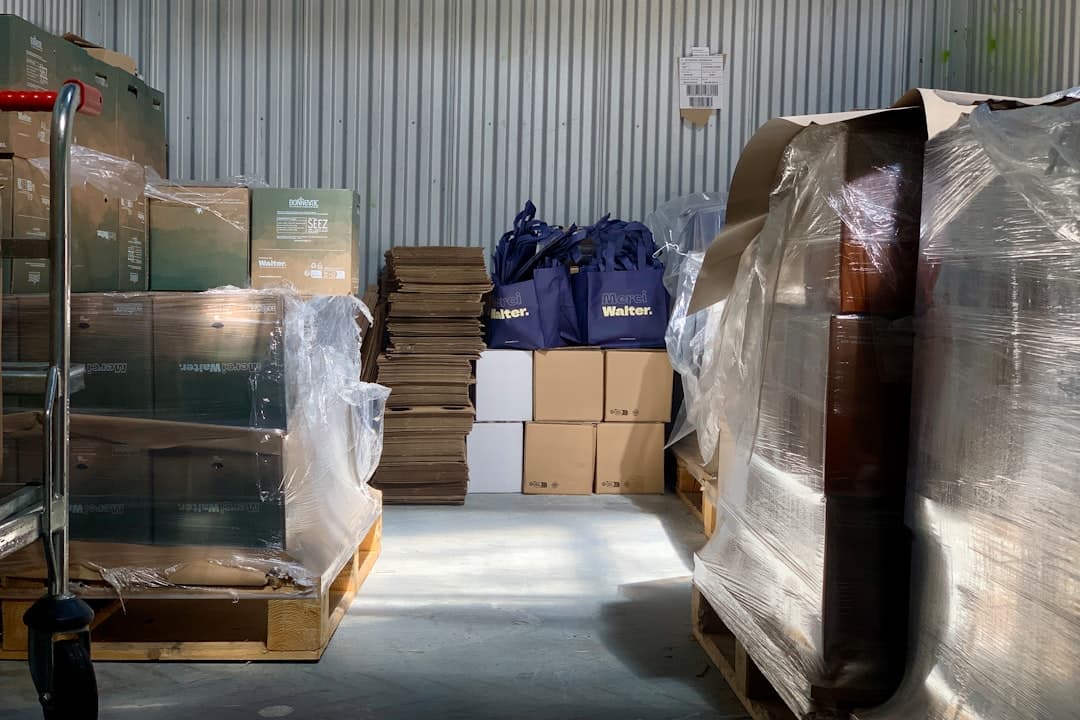
"Where are all the moving pads?"
If you manage a moving company, you have likely heard (or screamed) this phrase. Inventory in the moving industry is notoriously difficult to manage. It's fluid. It moves. It gets left in customers' basements. It gets "borrowed" by crew members. It gets buried in the back of a warehouse.
For decades, inventory management meant a clipboard, a pen, and a stressed-out warehouse manager trying to do a manual count on Friday afternoon.
AI Inventory Management changes this chaotic reality into a streamlined, predictive operation. This article explores how Computer Vision, IoT, and Predictive Analytics are saving moving companies thousands of dollars in lost assets and wasted time.
The Hidden Costs of Poor Inventory Management
Before discussing the solution, let's quantify the pain. The cost of poor inventory management is often hidden in the "Cost of Goods Sold" or "General Expenses," but it bleeds profit.
- Asset Shrinkage (Theft/Loss): A single moving blanket costs ~$15. A dolly costs ~$150. A confusing operational environment is a breeding ground for loss. Movers leave pads behind. They forget toolkits. Without tracking, this "breakage" is just accepted as the cost of doing business. It shouldn't be.
- Operational Delays: The "Morning Rush" is critical. If a crew spends 30 minutes looking for straps or a piano board because they weren't restocked, that's 30 minutes of labor paid for zero revenue. It also delays the arrival at the customer's house, starting the day on a bad note.
- Over-Purchasing: Because owners don't trust their inventory counts, they panic-buy. "I don't know if we have enough tape for the summer, just buy 5 more pallets." This ties up cash flow in stock that sits gathering dust.
1. Computer Vision: The Automated Warehouse Manager
Manual counting is error-prone and slow. AI-powered Computer Vision automates it.
The "Smart Bay" Concept
Imagine installing inexpensive cameras in your loading dock or warehouse ceiling. These cameras are connected to an AI model trained to recognize moving equipment.
- Automated Audits: As Truck #5 returns from a job and unloads, the camera counts the pads.
- AI Observation: "Truck #5 checked out 60 pads. Camera counts 52 pads returned."
- Action: The system instantly flags the discrepancy on the Crew Leader's checkout tablet. "Hey Mike, you're short 8 pads. Did you leave a bundle at the house?"
- Result: Immediate accountability. When crews know the "Eye" is watching and counting, shrinkage drops by 90% almost overnight.
Related Reading: Efficiency like this is key when Scaling Your Moving Business.
Warehouse Tetris
For companies that offer storage (Vaults/Pallets), space is money. AI analyzes the visual feed of the warehouse floor to optimize cubic efficiency.
- Gap Detection: "There is 400 sq ft of utilizeable vertical space in Row C."
- Stacking Safety: "Alert: The stack in Bay 4 is leaning at a 5-degree angle. Risk of collapse." This prevents accidents and maximizes the revenue generated per square foot of warehouse space.
2. IoT and Active Tracking
Computer Vision works great in the warehouse, but what about when the truck leaves? This is where the Internet of Things (IoT) comes in.
Smart Asset Tagging
High-value items—Safe Jacks, Library Carts, Masonite Boards, Lift Gates—should be tagged with durable Bluetooth Low Energy (BLE) beacons or long-range RFID tags.
- Geo-Fencing: If a $500 appliance dolly leaves the geo-fence of the warehouse without being assigned to a specific job ticket, the Ops Manager gets an alert.
- The "Left Behind" Alarm: The truck is leaving the customer's GPS coordinates. The scanner on the truck detects that the "Safe Jack" tag is no longer in range (it's still in the client's garage).
- Alert: The driver's tablet buzzes: "WARNING: Safe Jack not detected on truck."
- Result: The crew turns around and gets it. Saved $500 and a trip back.
3. Predictive Procurement: Just-In-Time Inventory
Moving is seasonal. You burn through tape, bubble wrap, and boxes in June/July/August. You use very little in February.
Manual purchasing involves guessing. "It's May, I better order a lot."
AI uses Predictive Analytics:
- Data Ingestion: The AI looks at your booking calendar (Booked Jobs) and your historical consumption rates (Data from previous years).
- Calculation: "You have 50 large moves booked next week. Based on history, a 4-bedroom move consumes 3.5 rolls of tape and 20 lbs of paper."
- Prediction: "You will run out of tape on Thursday at 2:00 PM."
- Automation: "Draft Order created for supplier. Approval needed."
This shifts the business to a Just-In-Time (JIT) model. You hold less stock (freeing up cash) but never run out. You stop panic-buying at retail prices because you ran out of stock mid-day.
4. Digital Inventory for Customers (The Front End)
Inventory management isn't just internal. It's also about managing the customer's inventory.
The AI Digital Inventory List
Movers have legally used "Bingo Sheets" (the paper grid of cubes) for decades. It is archaic. Modern AI apps allow crews to create digital inventories that are legally binding and indisputable.
- Photo Documentation: The mover photographs the dresser. AI analyzes the photo. "Dresser. Condition: Scratched on left side."
- Timestamp/Geostamp: The photo is metadata-tagged.
- Blockchain Hash: The record is sealed.
- Sign-off: The customer signs the tablet.
The Claim Killer: Two weeks later, the customer claims: "You scratched my dresser!" The Claims Manager pulls up the AI record. "Actually ma'am, here is a timestamped high-res photo from before we touched it, showing the scratch. AI analysis confirms pre-existing damage." The claim is denied instantly with evidence. This saves thousands in insurance deductibles and payouts.
Related Reading: Learn more about Reducing Claims with AI Computer Vision.
Implementation Guide: Crawl, Walk, Run
Implementing AI Inventory sounds expensive. It doesn't have to be.
Phase 1: Digitize (Crawl)
- Stop using paper check-in/check-out sheets.
- Give crews tablets.
- Use simple barcode scanning for high-value items.
Phase 2: Connect (Walk)
- Integrate your inventory software with your CRM/Booking software.
- Start tracking consumption rates per job type to build your data set.
Phase 3: Automate (Run)
- Install cameras (Computer Vision) for auto-audits.
- Enable predictive ordering.
Conclusion
In a low-margin industry like moving, efficiency is the only lever you have to increase profits without raising prices. AI Inventory Management tightens the screws on your operation. It stops the leakage of assets, ensures your crews are equipped to win, and provides the data needed to make smart financial decisions.
Stop wondering where your moving pads are. Let the AI watch them for you.