How to Scale Your Moving Business from 3 to 10 Trucks using Automation
Hitting the growth ceiling? Learn the operational playbook for scaling a moving company. Automate dispatch, sales, and HR to break through to the 10-truck fleet level.
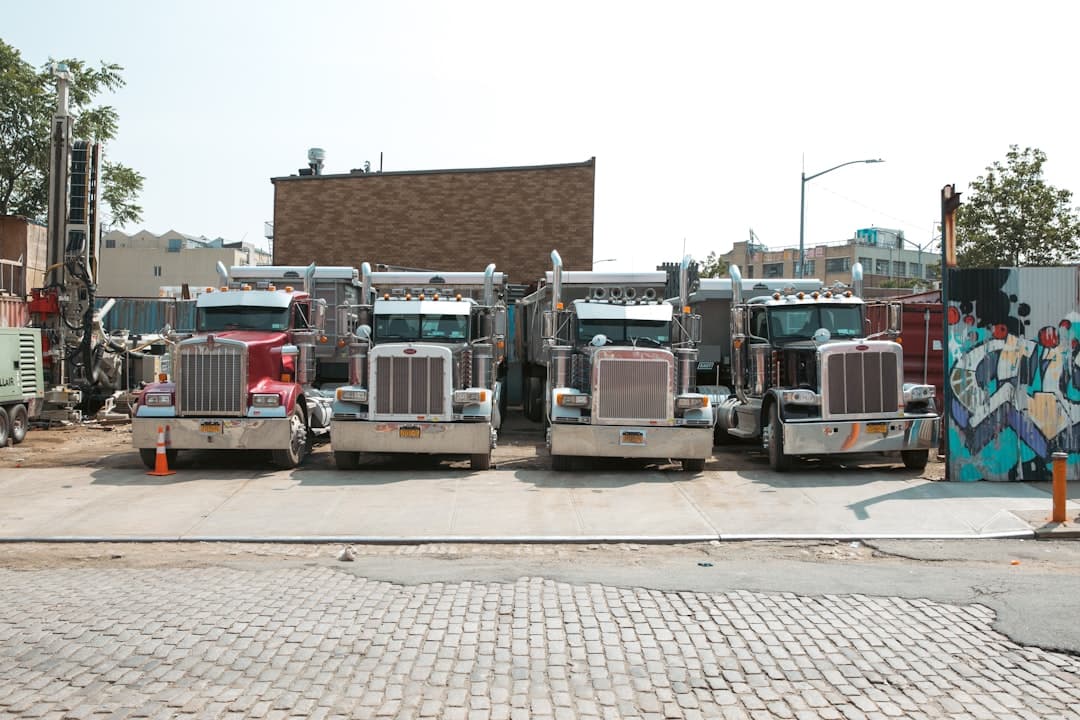
The "3-Truck Trap." If you have been in the moving industry for a few years, you know exactly what this is. It is that plateau where you are big enough to be exhausted, but not big enough to be rich.
- 1 Truck: You are the driver, the mover, and the sales guy. You make decent money but have zero freedom.
- 3 Trucks: You have a small crew. You are off the truck (mostly), but you are stuck dispatching, answering phones, and putting out fires 14 hours a day. You are the bottleneck.
- 10 Trucks: This is the "Freedom Zone." You have a General Manager, a Sales Manager, and a Dispatcher. The business runs without you.
How do you cross the chasm from 3 to 10? You cannot do it by working harder. You can only do it by building Systems and Automation.
This guide is the playbook for escaping the 3-Truck Trap.
Phase 1: Automating Sales (The Engine)
You cannot buy more trucks if you can't fill them. At 3 trucks, the owner is often the "Closer." You take the calls because you care the most. But you cannot scale yourself. You need a machine.
The automated Sales Funnel:
- Lead Capture: Stop using sticky notes. Every call, email, and form fill must go into a CRM (Customer Relationship Management) system automatically.
- Tool: HubSpot, Salesforce, or industry-specific tools like SmartMoving.
- The AI First Responder: You cannot afford a 24/7 sales team yet. Use AI Voice Agents to answer phones after hours and weekends.
- Rule: No lead goes to voicemail. Ever.
- Automated Nurture: If a lead doesn't book immediately, put them in an automated drip campaign.
- Stat: 60% of bookings happen after the 3rd follow-up. If you aren't following up automatically, you are burning cash.
Related Reading: Deep dive into AI Lead Generation strategies to fuel your fleet growth.
Phase 2: Systematizing Operations (The Chassis)
At 3 trucks, you keep the schedule in your head or on a whiteboard. At 10 trucks, the whiteboard is a recipe for disaster. One mistake (double booking) costs you thousands.
The Digital Dispatch Board: You need cloud-based dispatch software that is visible to everyone, everywhere.
- Job Details: No more printing BOLs (Bill of Lading). Crews work off tablets. They see the address, the notes ("Gate code is 1234"), and the inventory.
- GPS Integration: You need to know where every truck is without calling the driver. "How far out are you?" texts are a waste of time.
Standard Operating Procedures (SOPs): You must document exactly how you do things.
- "How to wrap a sofa." (Video training)
- "How to park the truck."
- "What to say when the customer opens the door."
If it isn't written down, it isn't a process; it's a personality trait of a specific employee. Scaling requires processes, not personalities.
Phase 3: The Hiring Machine (The Fuel)
The #1 constraint to scaling is labor. "I have the jobs, I just can't find the guys." You treat hiring as an "emergency" activity—you only look for guys when someone quits. To scale, hiring must be a "marketing" activity—always on.
Automated Recruiting Funnel:
- Always Be Posting: Have ads running on Indeed/Craigslist 365 days a year.
- The Auto-Filter: Don't read resumes. Use an automated form.
- "Do you have a valid driver's license?" (No = Auto Reject)
- "Can you lift 75lbs?" (No = Auto Reject)
- "Do you have reliable transportation?"
- Automated Scheduling: If they pass the filter, the system sends them a link to book their own interview.
- The "Ghost" Check: 50% of applicants won't show up. Send automated SMS reminders: "Interview tomorrow at 9 AM. Reply CONFIRM to keep your spot."
This system churns out qualified candidates so you have a "bench" of movers ready to go when you buy Truck #4.
Phase 4: Financial Controls (The Dashboard)
At 3 trucks, you check the bank balance to see how you're doing. At 10 trucks, cash flow kills you. Payroll hits before the invoices are paid.
Key Metrics to Track:
- Revenue Per Truck Per Day: If a truck isn't generating $1,500+ per day, why do you own it?
- Labor Percentage: Your direct labor (movers + drivers) should be 30-35% of revenue. If it hits 45%, you are losing money on every job.
- Related Reading: Use AI Inventory Management to stop equipment leakage which destroys margins.
- Customer Acquisition Cost (CAC): How much did it cost to get that booking? If you spend $200 in ads to get a $800 move, your marketing is broken.
Phase 5: Reputation Management at Scale
When you are the lead mover, every job gets 5 stars because you care. When you have 10 crews, quality dilution is the enemy. One bad crew can ruin the reputation of the other 9.
Automated Quality Control:
- Post-Move Survey: Text the customer 1 hour after the move. "Rate your experience 1-10."
- Score 9-10: "Awesome! Pls post to Google." (Link provided).
- Score 1-8: "Tell us what went wrong." (Internal feedback loop).
- The Bonus System: Tie crew pay to review scores.
- "Get a 5-star mention? Get a $50 bonus."
- This aligns the mover's incentives with the owner's goals.
Related Reading: Learn more about AI Customer Experience.
Conclusion: The Mindset Shift
Scaling from 3 to 10 trucks is not a trucking problem. It is a leadership problem. You have to stop being the "Best Mover" and start being the "Best architect of Moving Systems."
Automation buys you the time to be that architect. The tools exist. The playbook is right here. The only question is: Are you willing to let go of the dolly and pick up the dashboard?