Future of AI in Moving Industry 2025-2030
Explore emerging AI technologies transforming the moving industry - autonomous moving vehicles, virtual reality home previews, IoT tracking, and smart home integration.
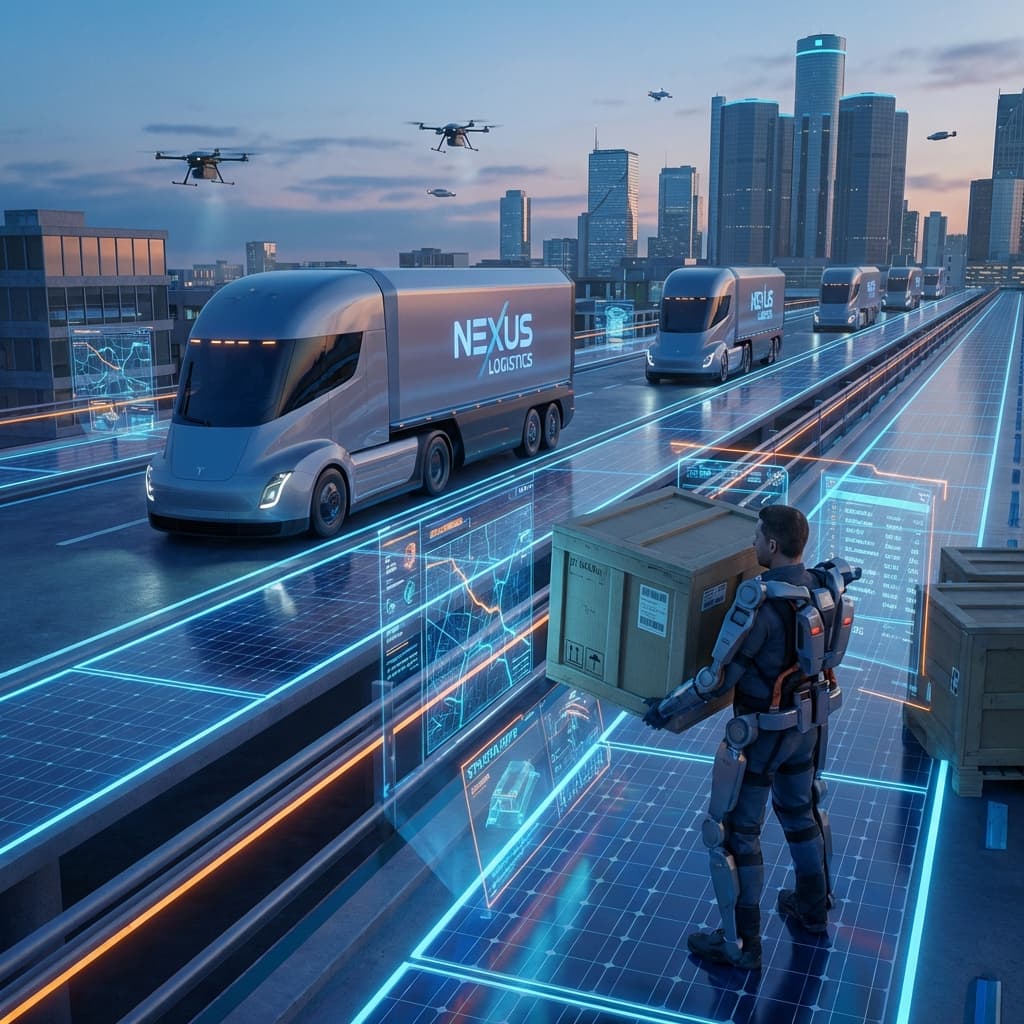
The moving industry is often perceived as traditional, blue-collar, and low-tech. Trucks, boxes, muscle, and sweat. While the core physical reality of moving objects remains, the digital infrastructure surrounding that physical act is undergoing a sci-fi level transformation.
We are currently in the "Early Adoption" phase of AI in logistics (Chatbots, Route Optimization). But what comes next? What does the moving company of 2030 look like?
This detailed forecast explores the bleeding-edge technologies—from Autonomous Trucks to Exoskeletons—that will redefine the relocation experience between 2025 and 2030.
1. Autonomous Logistics: The Driverless Fleet
The most disruptive change coming is the commercialization of Autonomous Trucking. While full Level 5 autonomy (no steering wheel, anywhere) is still a distant reality for city driving, Highway Autonomy (Level 4) is imminent for long-haul routes.
The "Platooning" Model
For long-distance movers (e.g., California to New York), the biggest bottlenecks are DOT Hours of Service regulations. A human driver can only drive 11 hours a day. The truck sits idle for 13 hours.
In the near future, we will see Platooning:
- A lead truck driven by a human pilot.
- Two or three autonomous trucks electronically "tethered" behind it, drafting closely to save fuel and mimicking the lead driver's every move.
- Impact: A single driver can transport 3x or 4x the volume. The convoy can run almost 24/7 if the pilot drivers switch out, drastically reducing cross-country delivery windows from 14 days to 4 days.
The Last-Mile Challenge
For local moves, autonomous delivery pods (similar to what we see with Amazon testing) might handle small "apartment moves" or supply deliveries. A pod drops off empty crates at a client's door and picks them up when packed, without a human crew needing to be present for the waiting periods.
2. The Spatial Web: VR/AR and the "Holodeck" Estimate
The in-home estimate is a trusted tradition, but it is inefficient. The current "Video Survey" (Zoom call) is a stepping stone. The future is Spatial Computing.
The LiDAR Revolution
Smartphones and dedicated glasses (like Apple Vision Pro key technology) are now equipped with LiDAR scanners.
- The Workflow: A customer puts on smart glasses or holds up their phone and walks through their house. The device doesn't just record video; it maps the geometry of the room in 3D.
- Instant Digitization: AI recognizes every object. "couch_3_seater.obj", "book_shelf_ikea.obj". It builds a "Digital Twin" of the household goods.
- Virtual Packing (The Tetris Simulator): Before a truck is even dispatched, the AI runs a physics simulation. It virtually packs the Digital Twin of the customer's items into the Digital Twin of a 26ft truck.
- It knows exactly how it fits.
- It knows the exact weight.
- It identifies items that won't fit through the front door, flagging them for disassembly before the crew arrives.
This eliminates the "overflow" nightmare where a second truck is needed last minute.
3. The Internet of Things (IoT) and the Smart Moving Box
The cardboard box has been the standard for 100 years. It is dumb, disposable, and weak. The future is reusable, intelligent crates.
Smart Asset Tracking
Reusable plastic crates embedded with cheap, printable RFID or Bluetooth Low Energy (BLE) chips will become the norm.
- Real-Time "Find My" for Stuff: Customers can open an app and see the exact location of the "Kitchen - Dishes" box. Is it on the truck? Is it in the warehouse? Is it in the new living room?
- Theft Prevention: If a box containing "Electronics" leaves the truck at an unauthorized location, the system alerts the dispatch center immediately.
- Digital Contents: No more writing on the side of the box with a Sharpie. You scan the box with your phone, and the screen shows you an X-Ray list of what's inside.
Related Reading: See how AI Inventory Management is already doing this for warehouse assets.
4. Robotic Augmentation: The Bionic Mover
We are not going to see humanoid robots (like Tesla Optimus) carrying pianos up stairs in the 2020s. The dynamics/balance required are too complex. Instead, we will see Exoskeletons.
Power Architecture
Moving is back-breaking work. Turnover is high due to injury and fatigue. Industrial exoskeletons (already used by Ford and Boeing assembly lines) will be adapted for movers.
- Lumbar Support: Active suits that take the load off the lower back when lifting.
- Grip Enhancement: Gloves that reduce grip fatigue.
- Impact: A 150lb mover will be able to lift a 200lb dresser as if it weighed 20lbs. This extends the career longevity of professional movers, reduces worker's comp claims, and allows a wider demographic (older workers, smaller frames) to work in the industry efficiently.
5. Smart Contracts and Blockchain
The moving industry suffers from a trust deficit. "Hostage loads" (movers raising the price mid-move and refusing to unload) are a notorious scam.
Smart Contracts built on blockchain technology can solve this.
- Escrow: The customer deposits the funds into a smart contract escrow, not the mover's bank account.
- GPS Trigger: The funds are only released when the truck GPS verifies it has arrived at the destination.
- Immutable Inventory: The condition of items (photos) at pickup is hashed and stored on the chain. If a damage claim arises, there is an indisputable record of the item's condition at origin, preventing fraud from both sides.
Related Reading: Reducing Claims with AI is the first step toward this transparency.
6. Dynamic Algorithmic Pricing (Surge Pricing)
Moving pricing is currently static and inefficient. The industry will move to a pure Dynamic Pricing Model, similar to Uber or Airlines.
AI Pricing Engines will ingest global data:
- Fuel prices.
- Weather events (Hurricanes in Florida = outbound demand spike).
- Housing market data (Interest rate drop = sales spike).
- Competitor availability.
Prices will update hourly.
- Customer A viewing a quote on Monday morning might see $1,200.
- Customer B viewing the same quote on Monday afternoon, after a competitor fully books up, might see $1,400.
This maximizes yield for moving companies and encourages customers to book "off-peak" slots to save money, smoothing out the demand curve.
7. Predictive Relocation
The ultimate AI capability is knowing the customer is moving before the customer knows.
Real Estate AI will predict "Propensity to Move" scores for every household.
- Data: "Family of 4 living in a 2-bedroom starter home. Income just increased. Eldest child is reaching school age. Market value of home is high." -> High Move Probability.
- Action: The Moving Company sends a direct mailer or digital ad to this specific homeowner before they even call a realtor. "Need more space? Here is an estimate to move to the suburbs."
Conclusion
The moving company of 2030 will look more like a technology company that owns trucks. The differentiation will shift from "Who has the strongest guys?" to "Who has the smartest data?"
For current moving company owners, this future is not a threat but an invitation. Those who begin digitizing their data and experimenting with AI tools today will be the architects of this future. Those who ignore it will be the Blockbusters of the logistics world.
The future is automated, augmented, and algorithmic. And it is moving fast.